Ash dieback is one of the most serious tree diseases affecting the UK, posing a significant threat to native ash trees and the wildlife that depends on them. As the disease continues to spread, recognising the warning signs early can help you take the right action to keep your property safe and reduce the risk of further infection.
What Is Ash Dieback?
Ash dieback is caused by the fungus Hymenoscyphus fraxineus, which attacks common ash trees. The disease spreads through airborne spores that infect leaves during the growing season before moving into the branches and trunk.
Over time, infected trees become weaker, making them more susceptible to secondary diseases and structural failure. While younger trees often die quickly, mature trees may survive for several years before declining significantly.
Common Signs of Ash Dieback
Spotting ash dieback early isn’t always easy, but there are several symptoms that indicate a tree may be infected.
Leaves Turning Brown or Black
One of the earliest signs is leaf damage during late spring or summer. Instead of remaining vibrant green, affected leaves begin to wilt, darken, and shrivel before falling much earlier than expected.
Dying Branch Tips
The disease usually starts in the outer canopy, causing the tips of branches to die back. As the infection progresses, larger limbs become affected, leaving noticeable gaps throughout the crown.
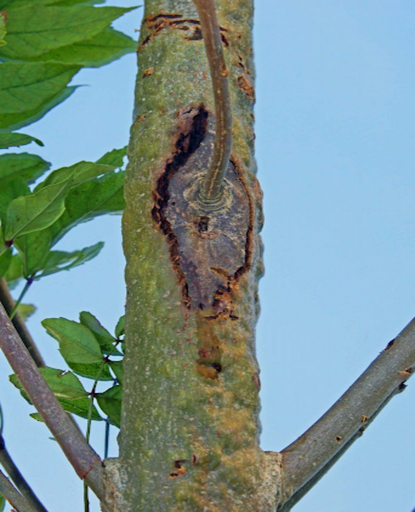
Dark Patches on the Bark
Infected trees often develop dark, sunken lesions where branches meet the trunk or along larger limbs. These damaged areas interrupt the movement of water and nutrients throughout the tree.
Cracked or Damaged Bark
As the disease advances, the bark may split or peel away. These cracks weaken the tree and create entry points for other pests and diseases.
New Shoots Growing from the Trunk
Trees affected by ash dieback frequently produce clusters of new shoots from the trunk or lower branches. This is the tree’s attempt to replace dying growth, but these shoots are usually weak and short-lived.
Thin or Sparse Canopy
A healthy ash tree should have a full, leafy canopy throughout the summer. Trees suffering from ash dieback often appear thin, with fewer leaves and large bare sections becoming increasingly visible.
Why Early Identification Is Important
Ash dieback weakens trees over time, increasing the risk of falling branches and, eventually, complete tree failure. This can become particularly dangerous if the tree is located near homes, roads, footpaths, gardens, or public spaces.
Although there is currently no treatment that cures ash dieback, identifying the disease early allows tree owners to monitor its condition, manage any safety risks, and decide whether pruning or removal is necessary.
What Should You Do If You Suspect Ash Dieback?
If you believe an ash tree on your property may be infected, it’s important to seek professional advice rather than attempting to deal with it yourself.
A qualified tree surgeon can:
- Inspect the tree and confirm whether ash dieback is present.
- Assess whether the tree remains safe to retain.
- Recommend appropriate management, pruning, or removal where necessary.
- Safely remove hazardous trees while protecting nearby property and vegetation.
Avoid transporting infected branches, logs, or leaf litter, as this may contribute to the spread of the disease.
Can Ash Dieback Be Prevented?
Unfortunately, ash dieback cannot currently be prevented once a tree becomes infected. However, good tree management can help minimise risks.
Regular inspections, particularly during the growing season, allow symptoms to be spotted before the tree becomes hazardous. Where removal is necessary, replacing lost ash trees with a diverse range of native species can help support biodiversity and create more resilient landscapes for the future.
Conclusion
Ash dieback continues to affect ash trees across the UK, making early recognition more important than ever. Knowing what symptoms to look for—including dying branches, blackened leaves, bark lesions, and thinning canopies—can help you respond before the tree becomes unsafe.
If you’re concerned about the health of an ash tree on your property, the experienced team at Tip Top Tree Surgery can provide expert inspections, honest advice, and professional tree management services to help keep your trees and your property safe.
📞 Call us for a free tree assessment: 07392001837
🌐 Visit our website: https://tiptoptreeandgroundcare.co.uk
📍 Our location
Let us help you maintain a landscape that’s as safe as it is stunning!